|
The 3 grades of hypothyroidism
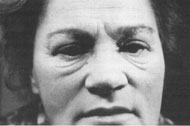
Overt hypothyroidism Fully developped hypothyroidism is easily recognized (fig 1). The combination of the various full-blown manifestations is typical and allows for an immediate diagnosis which is also suggested as soon as the patient speaks with a typically hoarse voice. It should be stressed, however, that because of the insidious progression of the disease, characteristics of overt hypothyroidism may be overlooked by the persons who live with the patients. Clinical features include lack of energy, cold intolerance, acroparesthesia, dryness of the skin and hair, weight gain, constipation, hoarsness of the voice, typical facial puffiness and pallor and slow reactivity. This major degree of hypothyroidism either follows years of progressive spontaneous thyroid failure or may occur rapidly after therapeutic thyroid ablation. Figure 1: Long lasting severe hypothyroidism
Mild hypothyroidism Clinical recognition of these patients is difficult since symptoms are minor or non-specific. In the past, clinical scores were devised in order to obviate this lack of sensitivity and specificity. Current biological means, notably the assay of circulating TSH, are potent diagnostic tools in subjects identified as at risk of mild hypothyroidism either on clinical presentation or on the presence of familial or personal history of thyroid disease or organ-specific autoimmune disease. Subclinical hypothyroidism This condition is defined as an asymptomatic state in which the reduction in thyroid hormone secretion is compensated for by an increased TSH production to maintain a clinically euthyroid status. As alluded to in the introduction, this a condition of increasing importance. Due to the availability of more specific and more sensitive TSH and anti-thyroid antibody assays, its prevalence appears to be growing so that prospective studies aiming at defining the evolution profiles and the more appropriate strategy of management of this condition are warranted. Analytical descriptions Skin and connective tissue The skin tends to be dry, because of decreased sebum excretion rate, cool and yellowish pale because of a combination of some degree of anemia and hypercarotenemia due to impaired conversion of carotene to vitamine A. The subcutaneous swelling is most marked in the eyelids, around the eyes and on the back of the hands and feet. It is a rather firm edema without pitting. It results from an accumulation of glycosaminoglycans in the subcutaneous tissues that on its turn bind excess water. The hair is coarse and dry; alopecia may be present although most of the cases of this manifestation are unrelated to hypothyroidism. Thinning of the outer part of the eyebrows is unreliable both because it may be absent in confirmed cases and present in healthy women around menopause. Cardiorespiratory system Classical manifestations of the "myxedema heart” include an enlarged dilated heart on chest x-ray, bradycardia, low voltage and depression of the ECG and ST complexes with flattened or inverted T waves. An other classical manifestation is pericardial effusion, a significant contributor to the ECG abnormalities. Peripheral edema and distended neck veins may reflect heart failure which however occurs extremely rarely in the absence of other causes. Hypothyroidism reduces the cardiac output, decreases stroke volume and prolongs circulation time. Systolic time intervals measured by simultaneous recording of the ECG, phonocardiogram and carotid pulse tracing is prolonged. PEP (pre-ejection period) is also elevated. For years, the question of a link between hypothyroidism and an increased prevalence of ischemic heart disease has been debated. As described below, hypothyroidism favors hyperlipoproteinemia. As a result of poor cardiovascular adaptation to exercise and a reduction of vital lung capacity and maximum ventilatory capacity, shortness of breath is common. Also, there may be features of airway obstruction. Similarly, sleep apnoea is not uncommon. Aggravation of these symptoms is a major contributor to the severity of myxedema coma. When pericardial effusion is present, pleural effusion, either unilateral or bilateral, may be observed, sometimes in combination with ascites, despite the absence of evidence of heart failure. Brain, neuromuscular and skeletal systems In severe hypothyroidism intellectual functions are slow, with somnolence, diminished memory and speech difficulties. Speech is characteristically slow and dysarthric with apparent difficulties at mobilisation of lips and jaws associated with the already mentionned hoarseness due to mucinous deposits in the vocal cords. In fact however, apparent intellectual ability is often surprisingly conserved in the face of very highly elevated TSH and nearly undetectable concentrations of both T4 and T3. However, longer and more careful observation of the patients, or stressful conditions, will demonstrate the impaired intellectual adaptability of the patients. Psychiatric disturbances may be observed, such as depression or, more rarely, paranoid or agitated states, the so-called "myxedema madness”. Hearing loss is common, of the perceptive reversible type, different from the type observed in Pendred's syndrome. Vertigo is a common complaint, sometimes associated with cerebellar ataxia. Thyroid dysfunction is often demonstrated in depressed patients. Interestingly enough this combination is observed also with "subclinical” hypothyroidism. There are observations suggesting a link between the presence of antithyroid antibodies and depression which clearly deserve further followup studies. Paraesthesias, numbness of the fingers and toes are frequent and may represent early manifestations of nerve entrapment syndromes more frequently observed in the median nerve at the wrist than for other nerves at other sites, for example the tarsal tunnel. These are due to mucinous deposits. True peripheral neuropathy is rare. Muscles and, to a lesser degree, joints are painful, which is aggravated in the cold. Nocturnal muscle cramps and stifness are one of the more common complaints. Muscular exercice and strength, on the contrary, appear normal. The prolonged relaxation phase of the tendon reflex is very common but the lack of specificity and sensitivity of this feature which was the basis of the measurement of the Achilles tendon reflex duration led to abandon this test. Muscle abnormalities in hypothyroidism are confirmed by electromyographic alterations. There is no correlation between blood concentration of CPK and oxalo-acetate transaminase and severity of muscle involvement. Bone metabolism is affected with a slowing of bone remodelling activity leading, possibly, to a thickening of bone trabeculae as demonstrated for instance by the observation of thicker than normal iliac cortices. Also, urinary hydroxyproline excretion and serum osteocalcin levels have been found to be low in untreated hypothyroid patients. Gastro-intestinal tract Constipation, leading rarely to paralytic ileus or pseudo-obstruction, is very common and usually unspecific. Anorexia is frequent, contrasting with a usual moderate weight gain which is mainly due to tissue infiltration. Achlorhydria and mucosal atrophy, associated with circulating anti-gastric parietal cell antibodies, should be suspected in the context of polyautoimmune disease. About 10% of patients with autoimmune hypothyroidism may have an autoimmune gastritis. Renal function Glomerular filtration rate and effective renal plasma flow are often reduced. Urinary output is decreased without evidence of renal insufficiency. Protein extravasation and accumulation of water and mucopolysaccharides in interstitial spaces account for the myxedematous appearance and the serous effusion. The mechanism of the dilutional hyponatremia observed in some patients with peripheral hypothyroidism is unclear but appears to result from the decreased renal blood flow and glomerular filtration rate and to involve some degree of inappropriate antidiuretic hormone effect or secretion. Hyponatremia is common in myxedema coma. In central hypothyroidism, hyponatremia is rather due to ACTH deficiency. Hematological system Anemia is very common in hypothyroidism, affecting more that 25% of the patients. It may be normocytic, macrocytic or microcytic, depending upon the more dominant effect of the three mechanisms potentially involved: the lack of stimulation of hematopoiesis by thyroid hormone, the deficiency in vitamine B12 due to an associated pernicious anemia or an iron deficiency resulting both from polymenorrhea and achlorhydria-related impaired iron absorption, respectively. Metabolism and endocrine functions The hallmark of hypothyroidism is the 35-40% decrease in the basal metabolic rate with reduction in oxygen consumption and decreased heat production. Lipid metabolism is affected: total cholesterol tends to be elevated with a predominant increased of LDL and, less frequently of VLDL, remnants or HDL with an augmented Apo A1 constituant. Hypertriglyceridemia results from increased hepatic output of VLDL. ApoB synthesis is also increased, as well as that of ApoE. Receptor-mediated catabolism of LDL is reduced because of a decreased expression of the LDL cell surface receptors, a modification which is dependent on a polymorphism of the LDL receptor gene. In contrast, hepatic cholesterol synthesis is decreased in hypothyroidism. In the female, menorrhagia is frequent and may lead to unnecessary hysterectomy if the diagnosis of hypothyroidism is not considered. Amenorrhea and anovulation are frequent, as well as infertility. Pregnancy may occur but is usually complicated if appropriate thyroxine treatment is not rapidly institued. Galactorrhea and hyperprolactinemia may be observed, which are corrected by thyroxine treatment. Also, in cases with pituitary enlargement due to thyrotroph hyperplasia, differential diagnosis with prolactinoma rests on the moderate elevation of prolactin levels (<100ng/ml) and the co-existence of severe long-standing hypothyroidism. Indeed, the pituitary gland may be enlarged in long-lasting primary hypothyroidism which is reverted after several months of substitutive treatment. Thyroid hormone regulates positively both GH secretion and IGF-I action. This accounts, at least in part, for the retardation of growth observed in hypothyroid children. Peripheral metabolism of adrenal steroids is affected by hypothyroidism with a usual reduction of urinary steroid excretion and of cortisol disposal rate. However, plasma cortisol, as well as aldosterone levels, are normal, although the stimulation of the corticotroph by hypoglycemia or metyrapone, as well as that of the adrenal by ACTH, might be occasionnaly reduced. It is important to note that thyroid hormone administration might decompensate associated corticotroph insufficiency in the case of central hypothyroidism, or adrenal function in the case of associated autoimmune thyroid and adrenal deficiency known as Schmidt's syndrome. Indeed, chronic autoimmune thyroiditis may be associated with other autoimmune disorders in the context of type II polyglandular autoimmune syndrome. It is twice as frequent in females than in males. In this syndrome prevalences of adrenal or thyroid insufficiency and diabetes mellitus are around 60, 70 and 50%, respectively; vitiligo, hypogonadism and permicious anemia are less frequent. In contrast, hypothyroidism is much less frequent (10%) in Type I polyglandular autoimmune syndrome, an early onset disease characterized by the presence of mucocutaneous candidiasis, alopecia, malabsorption, hypoparathyroidism, adrenal insufficiency, hypogonadism and chronic active hepatitis. Special manifestations Elderly subjects The prevalence of overt hypothyroidism, as well as that of subclinical hypothyroidism, and the frequency of detection of antithyroid antibodies, tend to increase with age to reach 0.7-1.3% and 1.8-5.3% for overt hypothyroidism in men and women, more than 60 year of age, respectively. Subclinical hypothyroidism may affect up to 14% of a senior population while anti-TPO antibodies are detected in approximately 2% of men and 10% of women. In some series, 6-7% of perimenopausal women may present with a hypothyroid state. In contrast, clinical manifestations of hypothyroidism are especially misleading in elderly patients because of a greater lack of sensitivity and specificity. Biological tests may also be difficult to interpret (see "Diagnosis”). However, firm diagnosis and prognosis are mandatory since the benefit of treating aging hypothyroid patients is unquestionable. Obesity Despite the evidence accumulated for decades that common obesity does not result from hypothyroidism, numerous obese patients are still referred for a thyroid work-up. Except for the periods of caloric restriction which may be responsible for a fall of T3 and an increase of rT3, thyroid status is normal in obesity and administration of thyroid hormone or thyroid preparations is, on the whole, harmful. Hypothyroidism usually favors a 2-3kg weight gain which will be corrected by the treatment. Myxedematous coma This complication of profound and long-standing hypothyroidism is exceptional. It is a life-threatening condition, occurring mostly in elderly subjects, characterized by mental confusion, severe hypothermia, shock and coma. In most of the cases, myxedematous or hypothyroid coma is triggered by exposure to cold or any intercurrent medical event, including anesthesia, administration of central nervous system depressants, infections, cardio-vascular or respiratory disease. The main symptom is hypothermia around 32-36°C with progressive lethargy. Cerebral hypoxia results from central respiratory depression and decreased cardiac output with marked bradycardia. Hypoventilation with hypercapnia and respiratory acidosis needs special assistance. Hyponatremia, hypoglycemia and hypotension are usual. Signs of profound hypothyroidism are present. Seizures may occur. Prompt and aggressive emergency treatment is mandatory. |