|
Congenital hypothyroidism is the more common endocrine disease in pediatric
medicine. In addition to its high prevalence (1/4000 births), it includes
all the characteristics of a disease for which a screening is efficient:
specific and sensitive tests, simple and efficient treatment. Because of
the central role of thyroid hormones in brain developement in the fetus
and the neonate, and in growth, hypothyroxinemia in the first years of
age has profound and irreversible consequences.
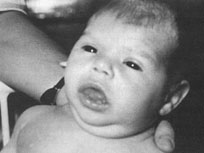
At birth, clinical recognition of hypothyroidism is difficult and most infants appear normal. The full-blown picture develops progressively over weeks and months. Initially, hypothyroid newborns may be post-mature (gestational age > 42 weeks), may weigh more than 4 kg, present with hypothermia and a cool skin, peripheral edema, abdominal distension and a posterior fontanel more than 5 mm in diameter; they feed poorly and have prolonged jaundice (> 3 days). During the first 4 weeks , signs and symtoms include macroglossia, failure to thrive, peripheral cyanosis and respiratory difficulties, lethargy, decreased activity and constipation. Later, during the third month of age, the picture appears more classical with myxedema, umbilical hernia, hypotonia, dry, yellowish pale skin, hoarsness of the voice, loud breathing and constipation (fig 2). Figure 2: Historical picture of a hypothyroid child.
In childhood and adolescence, growth retardation is the major feature with persistence of juvenile proportions of the body and delayed bone age with dystrophic ossification centers (epiphyseal dysgenesis). Because of the lack of maturation of the facial bones, the childish naso-orbital configuration persists. Permanent dentition is delayed. Sexual maturation is usually retarded with delayed puberty. However, sexual precocity has been observed in either sex. Intellectual development is impaired, which results from the lack of thyroid hormone effect on the many targets in the central nervous system. |