|
As demonstrated in fig. 5,
hyperthyroidism due to
multinodular goitre is preceeded by a long period
where the patient will have serum T4 and T3 in
the normal range, but lower than normal serum
TSH.
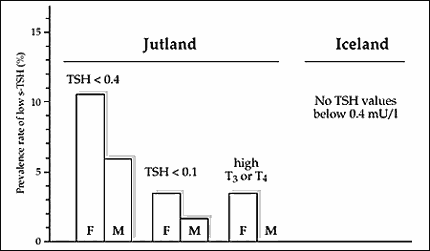
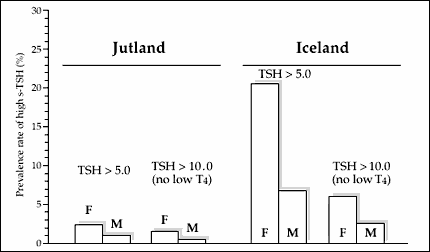
From the data in fig. 6 it would be anticipated that low serum TSH with subclinical hyperthyroidism would be more prevalent among elderly subjects in Jutland than in Iceland. This pattern was demonstrated in a comparative study of cohorts of 68 years old subjects (fig. 7). Subclinical and even frank biochemical but undiagnosed hyperthyroidism was very common among the elderly from the low iodine intake area. Figure 7a:
Figure 7b:
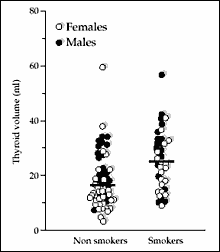
The majority of these subjects had no clinical goitre. However, when examined by ultrasound thyroid enlargement was common among the elderly in Jutland (fig. 8). This figure in addition demonstrates the importance of other goitrogenic factors in populations with low iodine intake. In this case it is tobacco smoking with generation of thiocyanate, which inhibits both the NaI symporter and thyroid peroxidase. Figure 8:
A frequent occurence of goitre and hyperthyroidism in elderly subjects is the most important clinical consequence of mild iodine deficiency. A high iodine intake as in Iceland is however associated with a higher prevalence of hypothyroidism (fig. 7). |