|
In the original survey the prevalence of newly
diagnosed overt hypothyroidism was 3/1000 women. Between
14-19/1000 women were known to have the disease previously. The
prevalence in men was less than 1/1000. It is important to note
that one third of these people had previously been treated by
surgery or radio-iodine for thyrotoxicosis. After destructive
treatment for thyrotoxicosis the incidence of overt
hypothyroidism is greatest in the first year after either
radio-iodine or surgery but the incidence of hypothroidism is
cumulative and continues to develop at a rate of between 2%-6%
per year after either treatment. The incidence data over the
twenty years of the Whickham study shows the frequency of
spontaneous hypothyroidism in surviving women to be between 3.5-4
cases per 1000 per year and most were diagnosed between the ages
of 45-64. The hazard rate increases with age to 13.7/1000 women
between 75-80 years of age. The mean incidence for men during the
same period was 0.6/1000 per year. The risk of developing
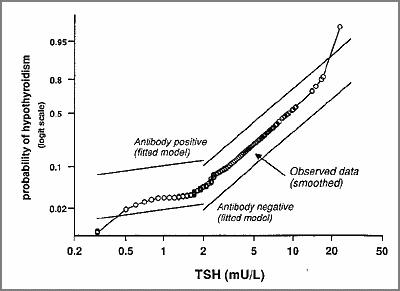
hypothyroidism was shown to relate strongly to the presence of
both raised TSH and positive thyroid antibody tests in the
original survey. The probability of developing
hypothyroidism was higher in women with
TSH concentrations above 2mu/l and with higher titres of
anti-thyroid microsomal antibodies (see figure). Neither a
positive family history of thyroid disease nor the presence of
goitre at the first survey nor parity was associated with an
increased risk of hypothyroidism. It is well known that
autoimmune thyroiditis may relapse in the post-partum period but
there is no clear evidence that this makes a significant
contribution to the long term incidence of thyroid failure.
Figure:
|